

Latest Release
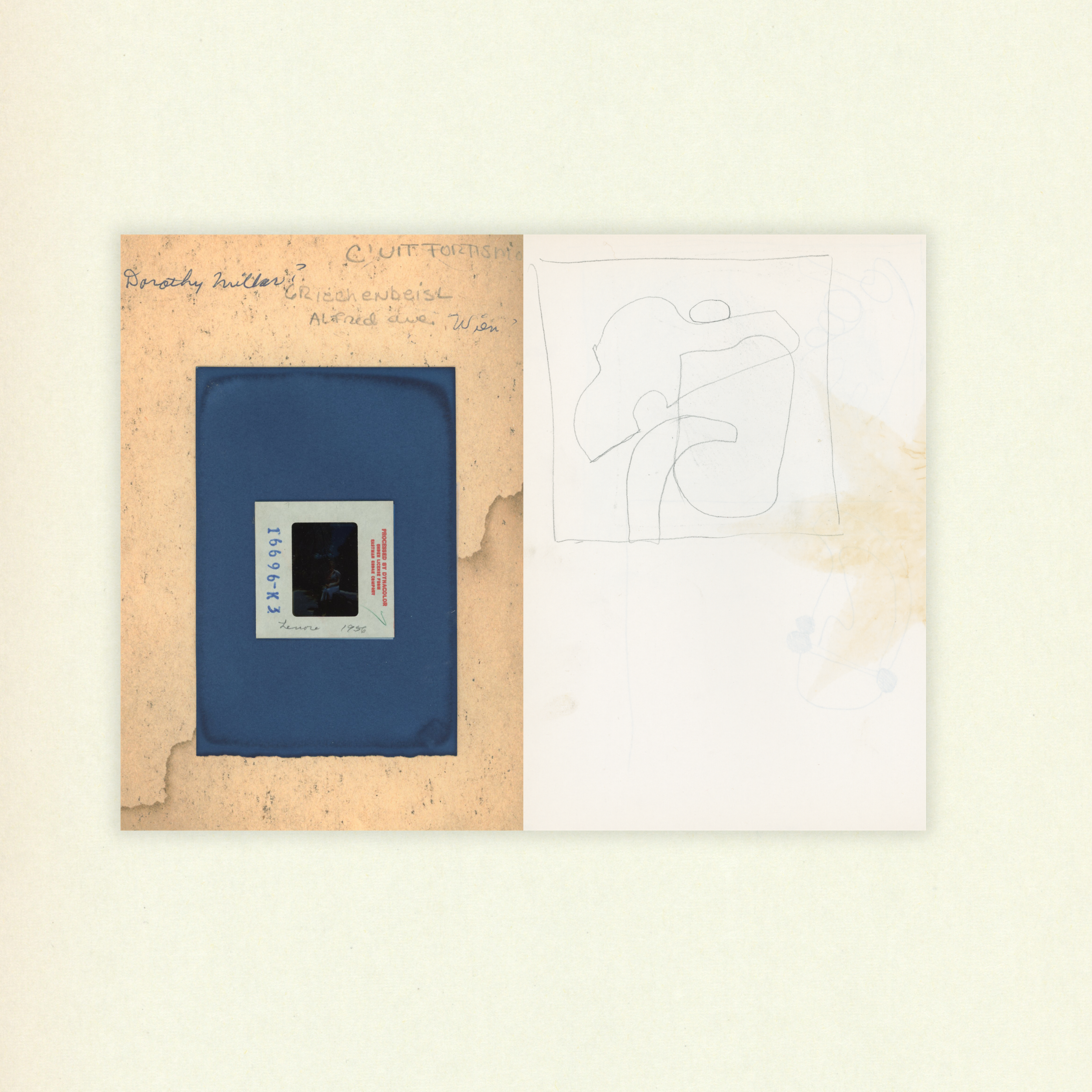
What She Saw
Brooke White
Current Titles
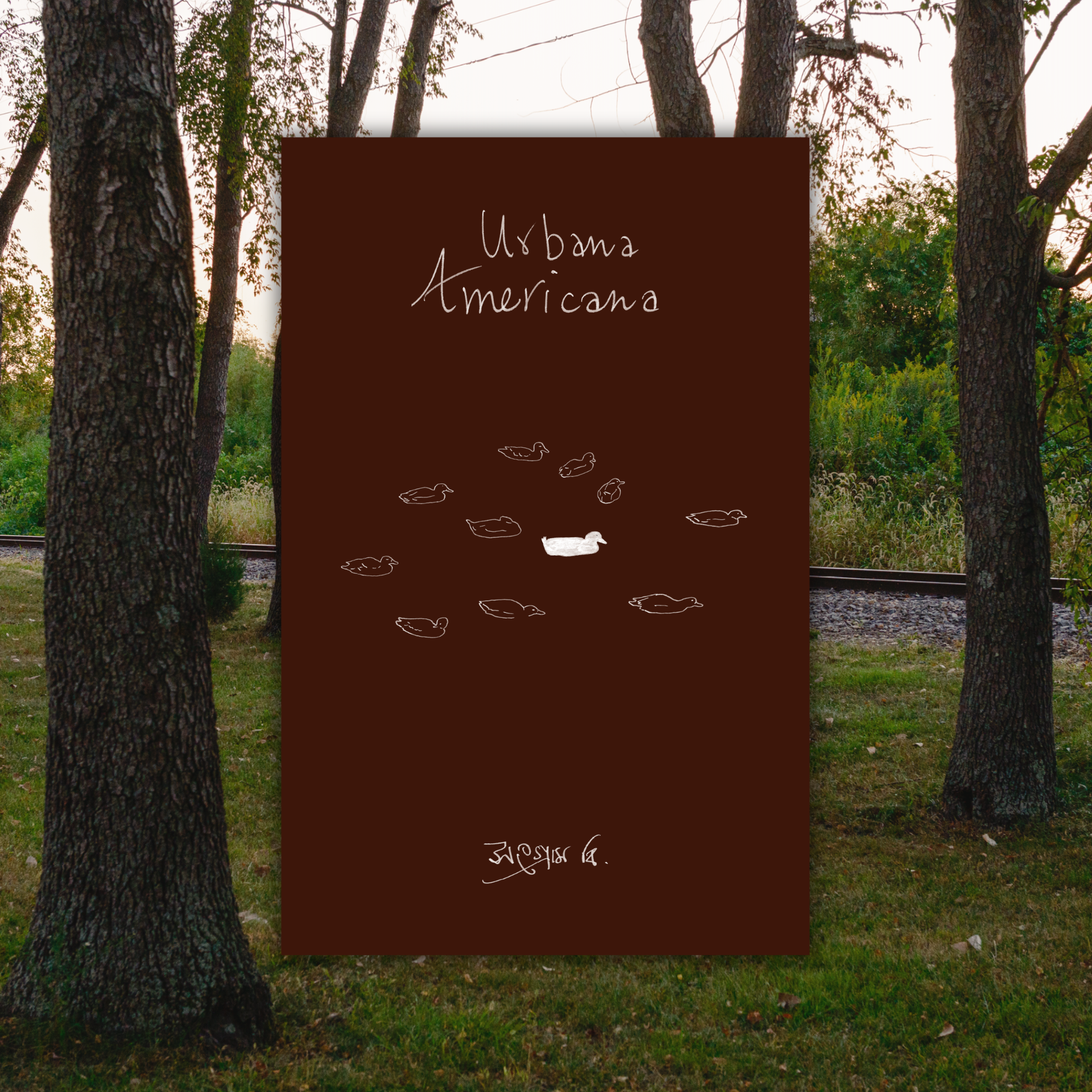
Urbana Americana emerges from a journey into an unfamiliar place and an attempt to understand it. It is an outsider’s perspective. Not because I resisted belonging, but because I could not, not entirely. I was born and raised in rural Bengal, India, and later moved to a small town in the American Midwest. This transition brought me into a world markedly different from the one I had always known.
Growing up exposed to American pop culture gave me a false sense of familiarity. The America I arrived in, however, was quieter, slower, and more withdrawn than I had imagined. The warmth and openness of my own cultural background did not easily find a place here.
This collection reflects my attempt to navigate that gap. In moments of homesickness, I returned to an old companion: the land. In its stillness, I discovered fragments of familiarity. Street corners, backyards, and quiet scenes resonated with something I knew deeply. Through these encounters, I began to understand the place on its own terms.
____
Sangram (b. 1990, India) is a photographer and physicist. His work is shaped by ancestral memory and the experience of moving between cultures and economic classes. Using photography as a way of looking closely, he explores the intersections of culture, class structures, politics, place, and time, tracing his own shifting position within them. His images emerge from an ongoing dialogue between the outer world and an inner landscape, where observation becomes a means of understanding and reflection.
____
Edition: 100
Page Count: 28
Dimensions: 5.5”x 8.5”
Format: Saddle Stitch / Zine
ISBN: 978-1-962415-17-0
____
Press

I grew up in Central Illinois and never left. My siblings made it as far as the biggest cities in Missouri, but eventually came back, and now their kids' childhoods are happening here, too. Through them, and through my images, I explore what it means to grow up and grow older in this landscape—a place that feels at once comforting and alienating, expansive and constraining.
____
Lyndsey Groth is a photographer and copywriter based in Champaign, Illinois. She was a 2023 participant in Editorial Portraits with Celeste Sloman at Santa Fe Workshops and featured in the 2025 Immaterial Books Fields of Vision show. Her work explores belonging, family, and life in the Midwest.
Edition: 100
Page Count: 28
Dimensions: 5.5”x 8.5”
Format: Saddle Stitch / Zine
ISBN: 978-1-962415-14-9

Here in rural southern Illinois, I see the same things over and over. Grain bins, baseball fields, cornfields, corn dogs, tractors, hay bales, farm houses, beer cans, churches, pork burger sales, and tank batteries. I photograph it all, I find the repetition comforting.
This work is inspired by the books of Ed Ruscha.
——————
Nathan Pearce is an artist based in Southern Illinois. Pearce works in book and zine making and photography. Pearce’s publications are held in several artists' book and library collections, including those at MoMA, The Met, Museum of Contemporary Photography, and the Center for Creative Photography. His work has been exhibited in solo shows at the PhotoNola festival, Cedarhurst Center for the Arts, Nizhniy Tagil Museum of Fine Arts, and The Rangefinder Gallery in Chicago. He has been published in over 200 books, zines, and exhibition catalogs and online in The Huffington Post, The British Journal of Photography, Juxtapoz, and Self Publish Be Happy.
——————
Edition: 100
Page Count: 26
Dimensions: 5.5”x8.5”
Format: Saddle Stitch / Zine
ISBN: 978-1-962415-10-1
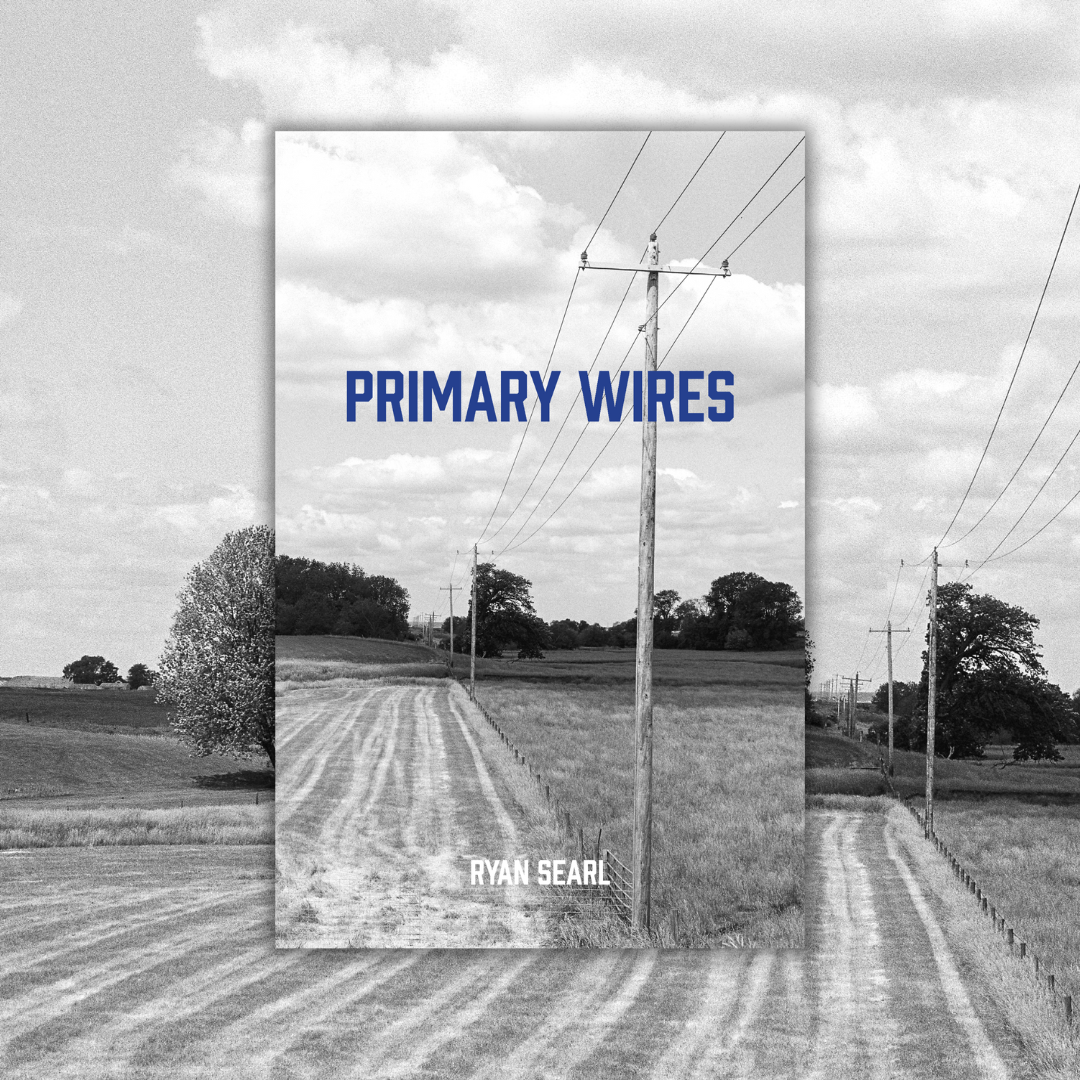
Being born and raised among some of the flattest land in the nation, utility poles and power lines became an early photographic fixation. Aside from the easy metaphors of connectivity, power, and the distribution of resources, these lines ebb and flow across flat Illinois farmland, from one horizon to another, in an undeniably moving manner. Primary Wires (named after the top-most pair of lines) feature just a few of the 180 million utility poles spread across the US.
——————
Ryan Searl (b. 1994) is a lens-based artist and photo zinemaker from Ottawa, Illinois. His work explores contemporary and underrepresented rural spaces in the tradition of regionalism and the FSA photo project. Searl's photography focuses on backroad midwestern communities that can often be characterized as too hermetic or flat for the American canon of post-documentary road trip photography, but hold a wealth of history, dignity, and unexplored stories. His work has been featured in Immaterial Book's “Fields of Vision” show and is in the collection of the Minneapolis College of Art and Design.
——————
Edition: 100
Page Count: 34
Dimensions: 5.5”x8.5”
Format: Saddle Stitch / Zine
ISBN: 978-1-962415-12-5
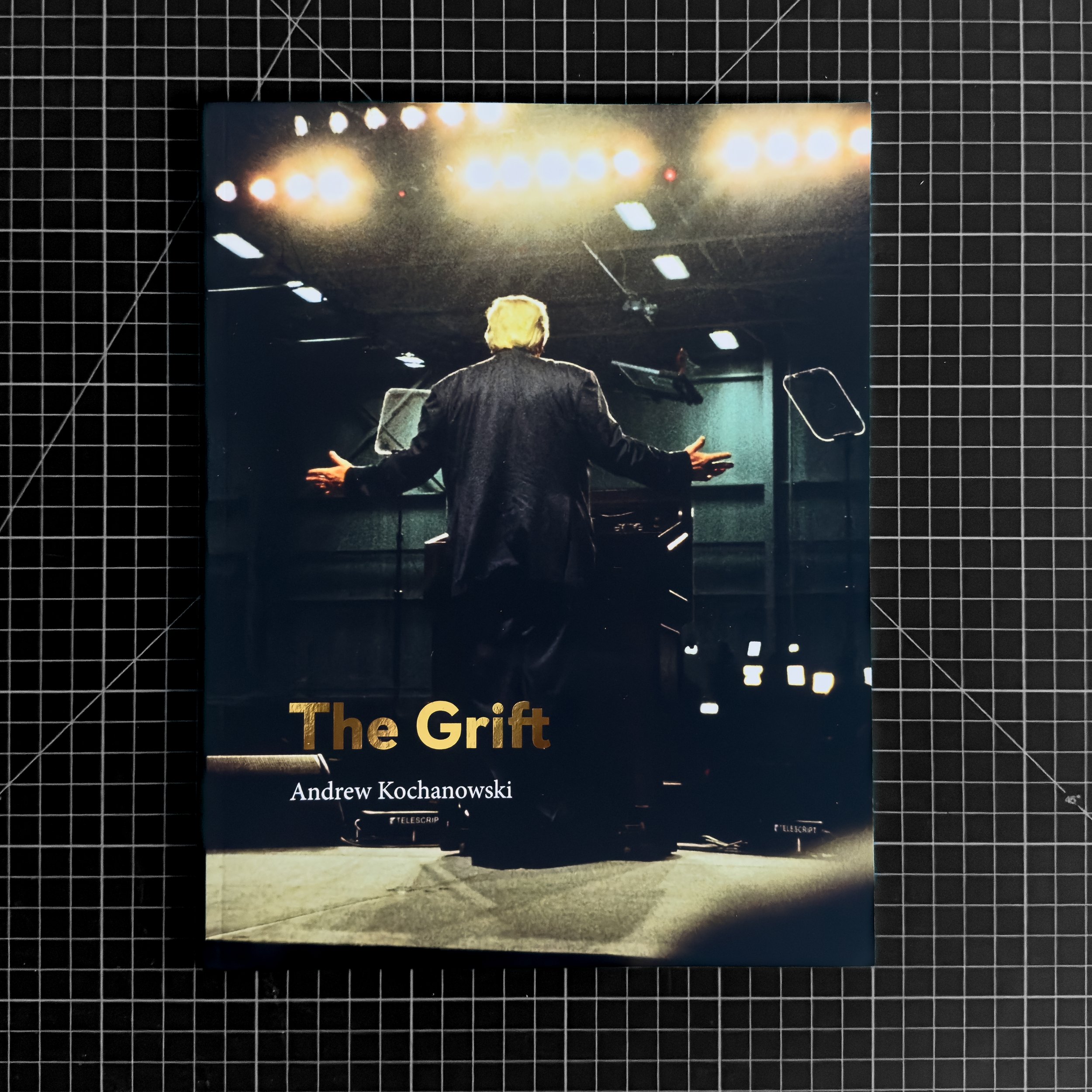
The Grift is not a political book in the traditional sense. Instead, it takes a dispassionate look at a phenomenon enabled by conventional mass media, new digital channels, and informal word-of-mouth networks. It looks to actors playing their parts, but more broadly to mutual, bottomless need and dependence. Feasting off the spectacle, the speaker and the crowd crave one another. One will lie to the other, and both will lie to themselves. Who is grifting who?
I’ll tell you why pyramid schemes are illegal. Because for every winner, there are 99 losers. Because no matter what you hear, you’re the one paying. There’s a reason the show is free. If you’re wondering about the mark in the room, it’s you.
——————
Andrew Kochanowski is a photographer based outside Detroit, USA. Since 2007 his work has appeared in both solo and group exhibits in Detroit, London, Paris, Warsaw, Berlin, New York, Brighton (U.K), Cardiff, Milan, San Francisco, and elsewhere, at venues such as the London Street Photography Festival, Brighton Bianale, SF StreetFoto Festival, Street Photo Milano, Miami Street Photography Festival, Paris Photo Month, and European Month of Photography in Berlin. His essays, images, and interviews have been published in numerous print and web publications, including Leica Blog, Metropolitan Detroit, Dodho, The Online Photographer, Anatomy, Eyeshot Magazine, and others. He has published essays and editorial work on professional boxing. Before devoting most of his time to candid photography, he shot various assignments for an international news agency. He is a founding member of Burn My Eye, an international photography collective that has been operating since 2011.
——————
Edition: 100
Page Count: 56
Dimensions: 8.5” x 11”
Format: Perfect Bound
ISBN: 978-1-7355008-9-8
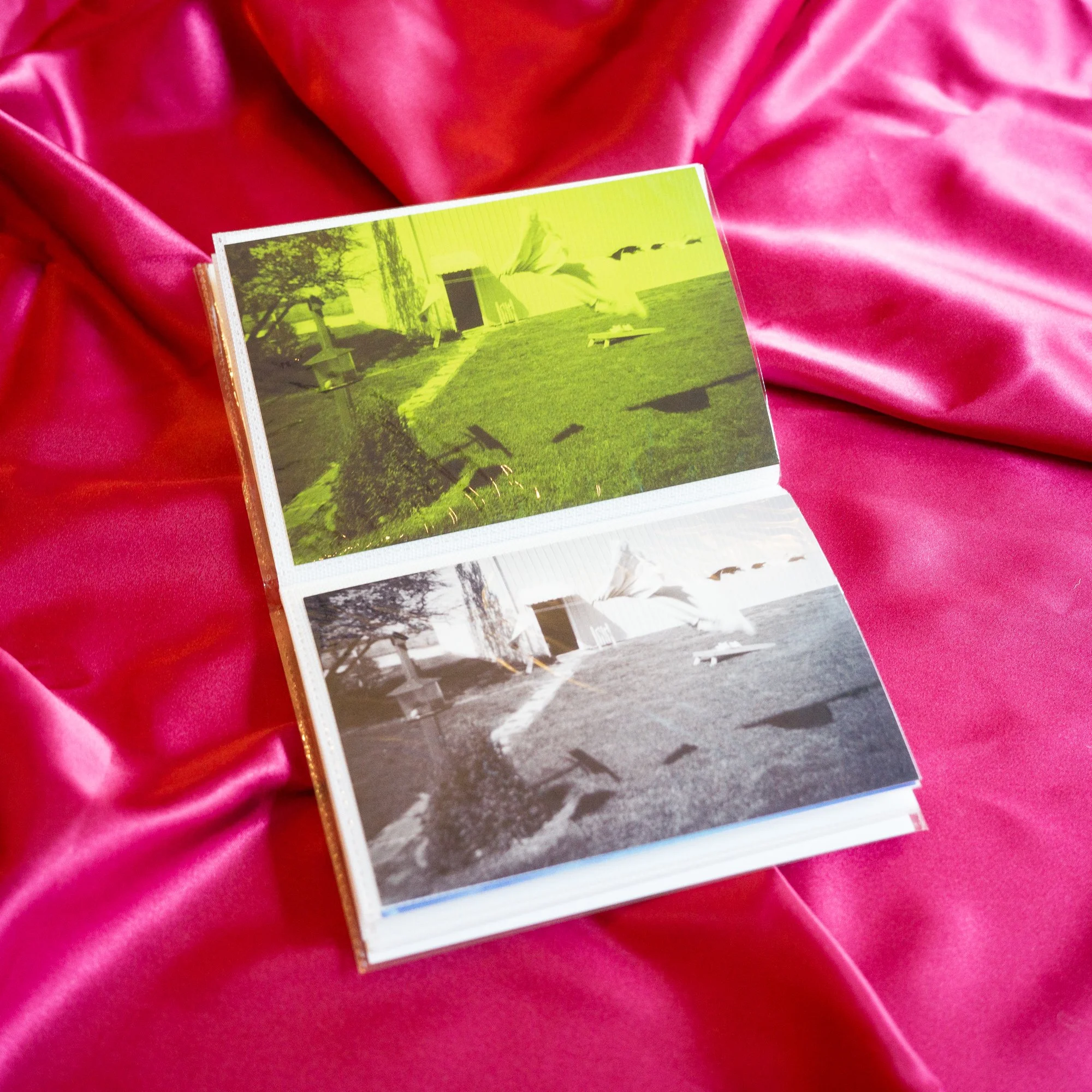
Every photo album I have has been rearranged over time, the order shifting, emphasis changing, and stories reconfigured as time passes. The images in this album, “See it When I Believe It,” have deep meaning to me. But the chance of new meanings will lie with you, the viewer. I want you to change the edit, shuffle pictures, put images up on your wall, make new connections with the life that I'm sharing.
“Meghan and I met during a socially distanced outdoor gathering, one of my first times leaving isolation after the first wave of Covid. I immediately wanted to be closer to her, physically and otherwise. That same feeling has never ceased. We were married a year to the day from when we first met. Those snapshots were made in a time that we were newlywed and experiencing the unexpected and surreal experiences of a new life together.”
This is not your standard photobook. We’ve used photo albums to house the selected images. Each version is handmade by the artist, choosing one of the three different covers and selecting a different order of images for each. This means each object is one of a kind.
——————
Nathan Pearce is an artist based in Southern Illinois. Pearce works in book and zine making and photography. Pearce’s publications are held in several artists' book and library collections, including those at MoMA, The Met, Museum of Contemporary Photography, and the Center for Creative Photography. His work has been exhibited in solo shows at the PhotoNola festival, Cedarhurst Center for the Arts, Nizhniy Tagil Museum of Fine Arts and The Rangefinder Gallery in Chicago. He has been published in over 200 books, zines and exhibition catalogs; as well as online in The Huffington Post, The British Journal of Photography, Juxtapoz and Self Publish Be Happy.
——————
Edition: 100
Page Count: 50
Dimensions: 4x6
Format: Photo Album
ISBN: 978-1-7355008-5-0
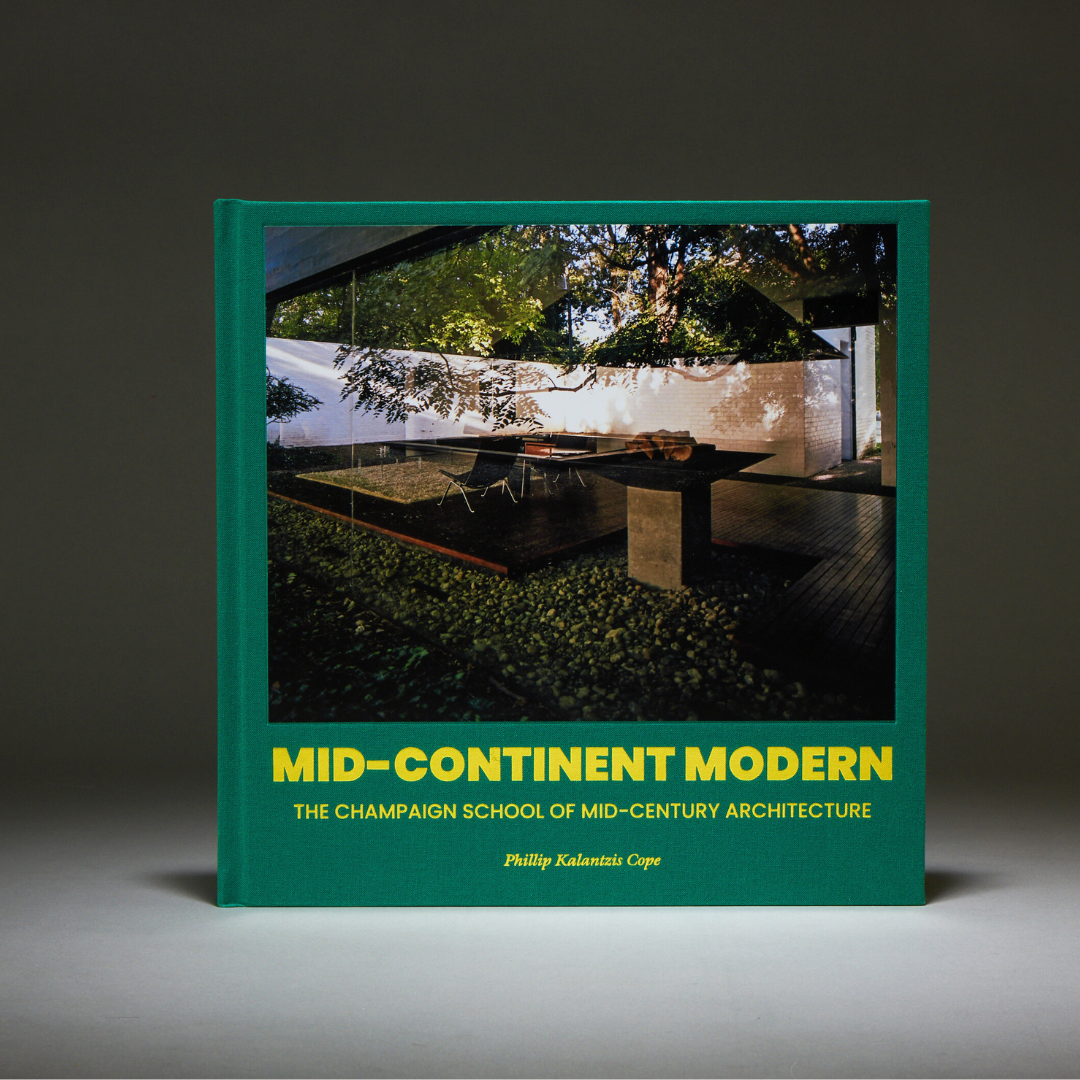
Mid-Continent Modern: The Champaign School of Mid-Century Architecture captures the understated beauty and enduring significance of mid-century architectural innovation in America's heartland. Revealing the remarkable contributions of architects Jack Sherman Baker, John Gordon Replinger, A. Richard Williams, Robert Louis Amico, and Jeffery S. Poss to the local built environment, this book tells the story of their work and the people who continue to care for these distinctive buildings.
The photographs, layouts, and text offer elements to construct a "Champaign School of Mid-Century Architecture," emphasizing formal simplicity, functional pragmatism, unaffected dignity, and thoughtful detailing. Architecture that is unmistakably modern yet thoughtfully integrated into its natural surroundings and in harmonious dialogue with the regional vernacular.
Introduction by Jeffrey S. Poss
—————
Phillip Kalantzis Cope is drawn to the subtle, unspoken narratives that shape our lives, found in the interactions between people and their environments.
www.phillipkalantziscope.com
—————
Edition: 1000
Page Count: 228 pages, including 134 photographic prints, and 24 plans and elevations
Dimensions: 11” x 11”
Format: Linen Hardcover; Offset
ISBN: 978-1-962415-08-8
—————
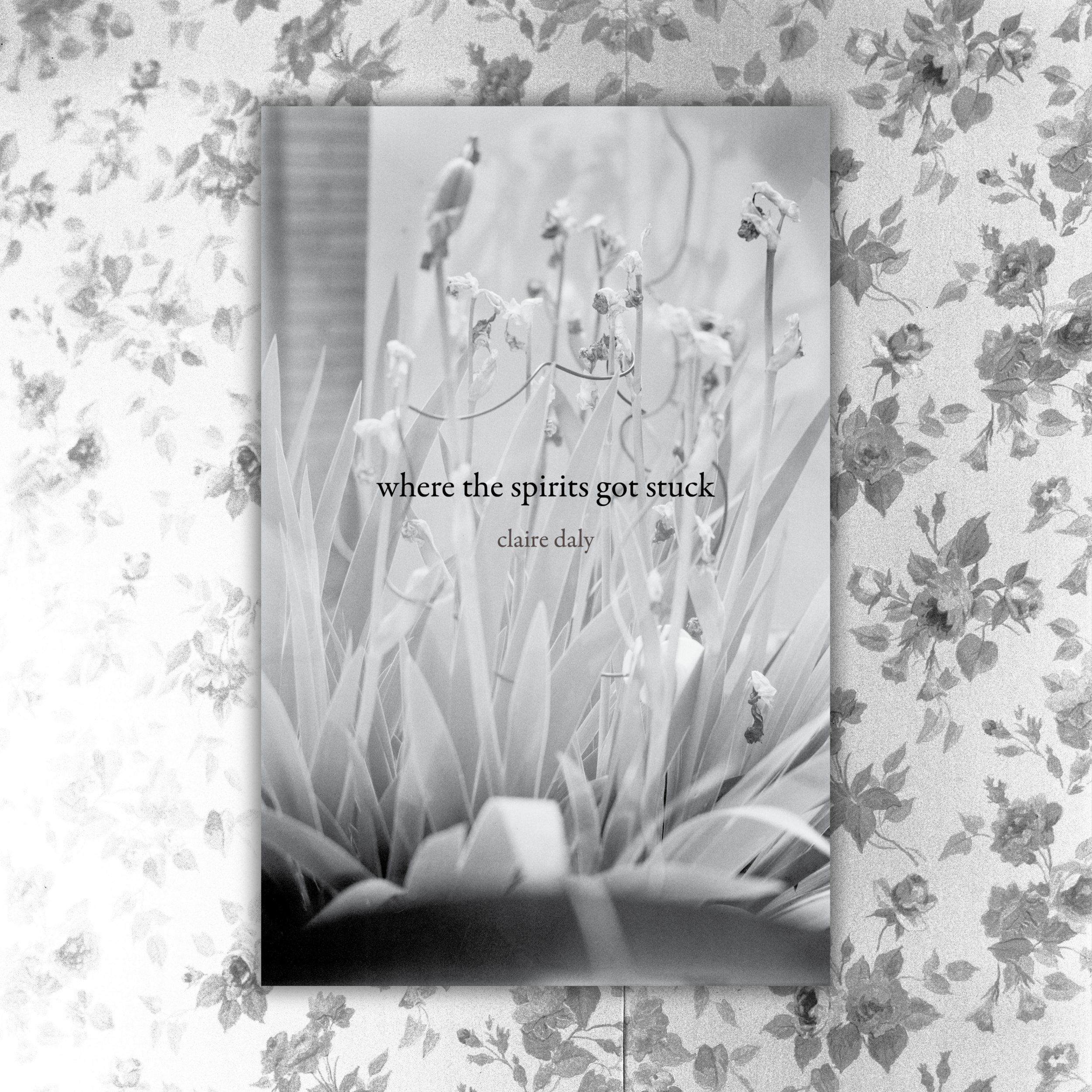
For six years, I photographed objects and interiors while preparing houses for estate sales. As I pieced each home back together, the sheer number of houses blurred into a single blueprint. The large-format camera allowed anomalies and the unexpected to reveal themselves—light blinding rather than clarifying. The images became a conduit between me and these strangers, as I let the unseen guide the work.
———
Claire Daly is a photographer based in Urbana, Illinois. She was a 2024 participant in Alec Soth’s Workshop from Home, a 2025 Fellow at Lesley University’s Low Residency in Visual Arts Summer Program, and a 2024/2025 recipient of an Illinois Arts Council Grant. Her current project is a part of Penumbra Foundation’s 2026 Long Term Program: The Photobook.
———
Edition: 100
Page Count: 28
Dimensions: 5.5”x 8.5”
Format: Saddle Stitch / Zine
ISBN: 978-1-962415-14-9

The Thread of Water is a reflexive wandering in the depths of the Mediterranean Sea. The photographs investigate the colonial politics of the underseas through the eeriness of subaquatic weightlessness and light contrasts: artifacts and bodies are altered, if not disincarnated, in undefined waterscapes that build a narrative of dispossession and perdition. From digital to analog photography, including thermal imagery, the collection curated for this book questions how movement can transcend landscapes to embrace affect. But, more than anything, "The Thread of Water" is an intimate narrative about trauma and queerness that navigates different forms of storytelling (photographs, drawings, poetry, fieldwork notes) to explore the in-betweens, the coexistent multiplicities, and the pervasiveness of liberatory praxis.
——————
Julie Patarin-Jossec's work spans feminist and Indigenous theory, ocean studies, and visual sociology. Through ethnography and art-based methods, she is interested in how colonial politics of dispossession and domestication articulate capitalist primitive accumulation and patriarchal violence while generating spaces for agency by disempowered populations. She investigates these dynamics in the fields of commercial diving and shellfish farming. Julie's audiovisual practice includes analog photography, essay film, documentary film, sound design, and experimental imagery techniques (e.g., thermal photography).
https://juliepatarinjossec.com/
——————
Page Count: 88
Dimensions: 5.5” x 8.5”
Format: Paperback, Perfect Bound
ISBN: 978-1-962415-00-2

A transect can be a path along which occurrences of studied objects are counted and recorded, or it can refer to dividing something by cutting across it. It can also be used to describe a line across a habitat. Brian O’Neill reflects on these multiple meanings as a methodological proposition for his inquiry into thenascent logics of urban development in the cultural and physical geographies of Phoenix, Arizona.
Cities in the American Southwest uniquely function without a center yet also contain tenuous sinews of infrastructure struggling to sustain a specific urban modality amid sprawling expansions resistant to traditional urban “densification.” O'Neill takes us on an autoethnographic journey, integrating images, reflective writing, and sound recordings to illustrate daily life along Phoenix’s transit routes. His work highlights the distinctive challenges and complexities inherent in desert urban environments, and more broadly in crafting unique socio-cultural documents of our times.
This project is augmented by a sonic album, a music video created in collaboration with composer Wyoming Toad, and an extended dialogue and contextual essay. A Desert Transect offers an alternative approach to conducting and presenting social and visual research.
A Desert Transect is the second installment in O'Neill’s visual ethnographic Transects series, examining the intersections between social dynamics, urban life, and nature.
——————
Brian O’Neill is a sociologist, writer, and photographer based in Phoenix, Arizona. Trained in both the United States and France, his work explores the relations of society to nature, using a variety of documentary and analytical techniques. Much of his output to date has investigated the practices and meanings of "industry" to local communities and environments. Brian is widely published in both academic and artistic fields. He is a contributing editor at The Photobook Journal, and the host of the podcast, Immaterial Voices.
——————
Edition: 100
Page Count: 120
Dimensions: 8.5” x 5.5”
Format: Spiral Bound
Design: © Alex Wilk
Images + Text: © Brian O’Neill
ISBN: 978-1-962415-09-5
——————
LINKS:
A full discussion of the book project can be found on Immaterial Voices
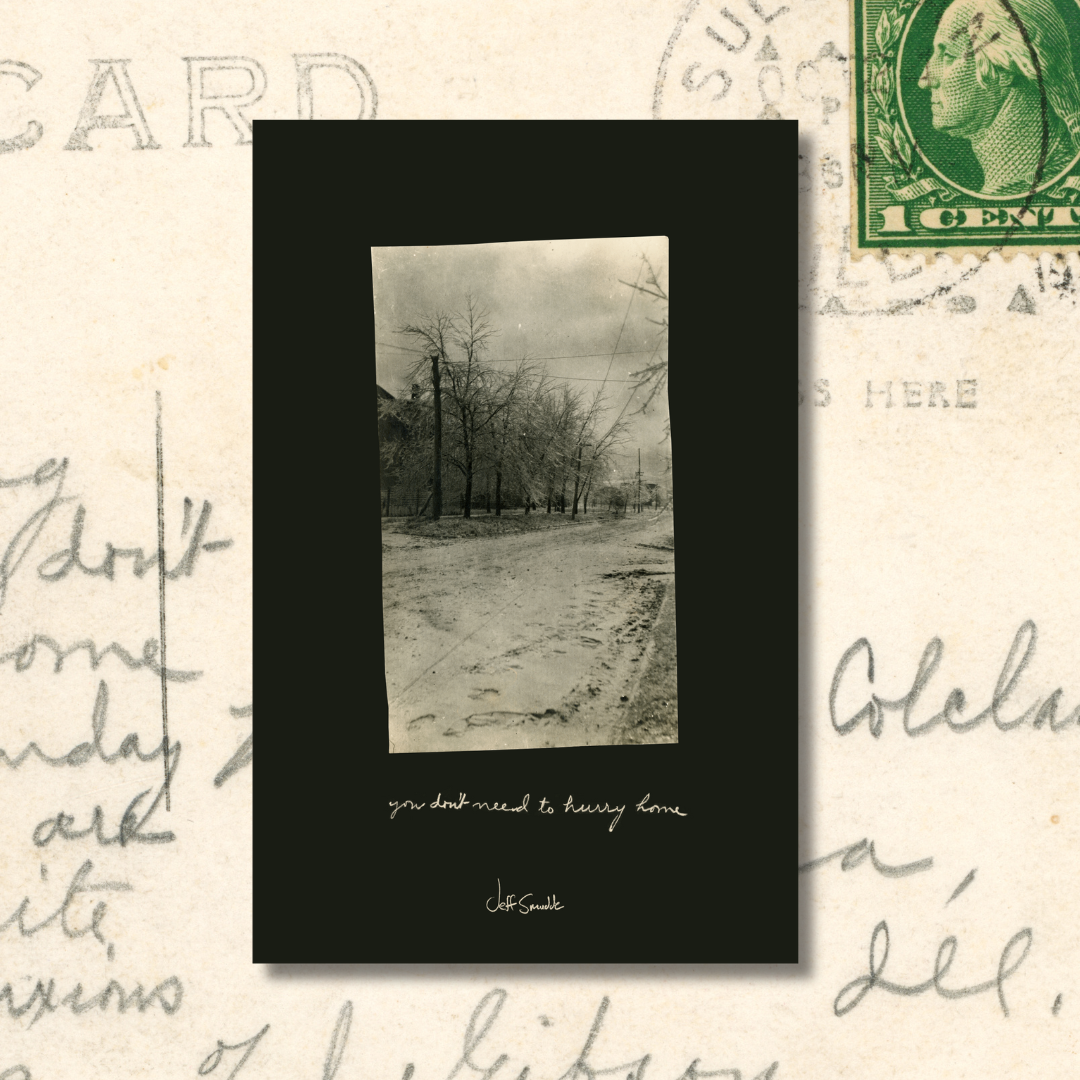
You Don’t Need to Hurry Home takes its name from a postcard sent in 1919 from Sullivan, Illinois, to Flora, Illinois. The postcard shows a rural road, likely in Sullivan, with telegraph poles overhead and frost-covered trees. Footprints and wheel tracks mark the lower third of the photograph, which was printed crookedly to adjust the image’s off-kilter angle. “We are getting along alright…” wrote the sender 106 years ago. “Write often as I am anxious…” This image captures an Illinois I hold dear, one I frequently photograph—the decaying rural spaces that have outlasted their time, the wooden posts and slats barely holding on, bullet-riddled signs, and barriers rarely performing their intended function. These photographs hold their subjects in perpetual tension, clinging to whatever they can, with the past permanently preserved within the frame.
——————
Jeff Smudde (pr. “SMOO-dee”; b. 1997, Metro Detroit, Michigan, he/him/his) is an artist currently based in the Providence, Rhode Island area using various photographic processes and sound. He received his Master of Fine Art at the University of Massachusetts Dartmouth in 2023 as a Distinguished Art Fellow and his Bachelor of Art from Illinois State University in 2019. His poetic documentary-style work comes from a background in journalism, a Midwestern cultural upbringing, and an interest in the landscape of America with a focus on perceptions of place and spirituality.
——————
Edition: 100
Page Count: 36
Dimensions: 5.5”x8.5”
Format: Saddle Stitch / Zine
ISBN: 978-1-962415-11-8
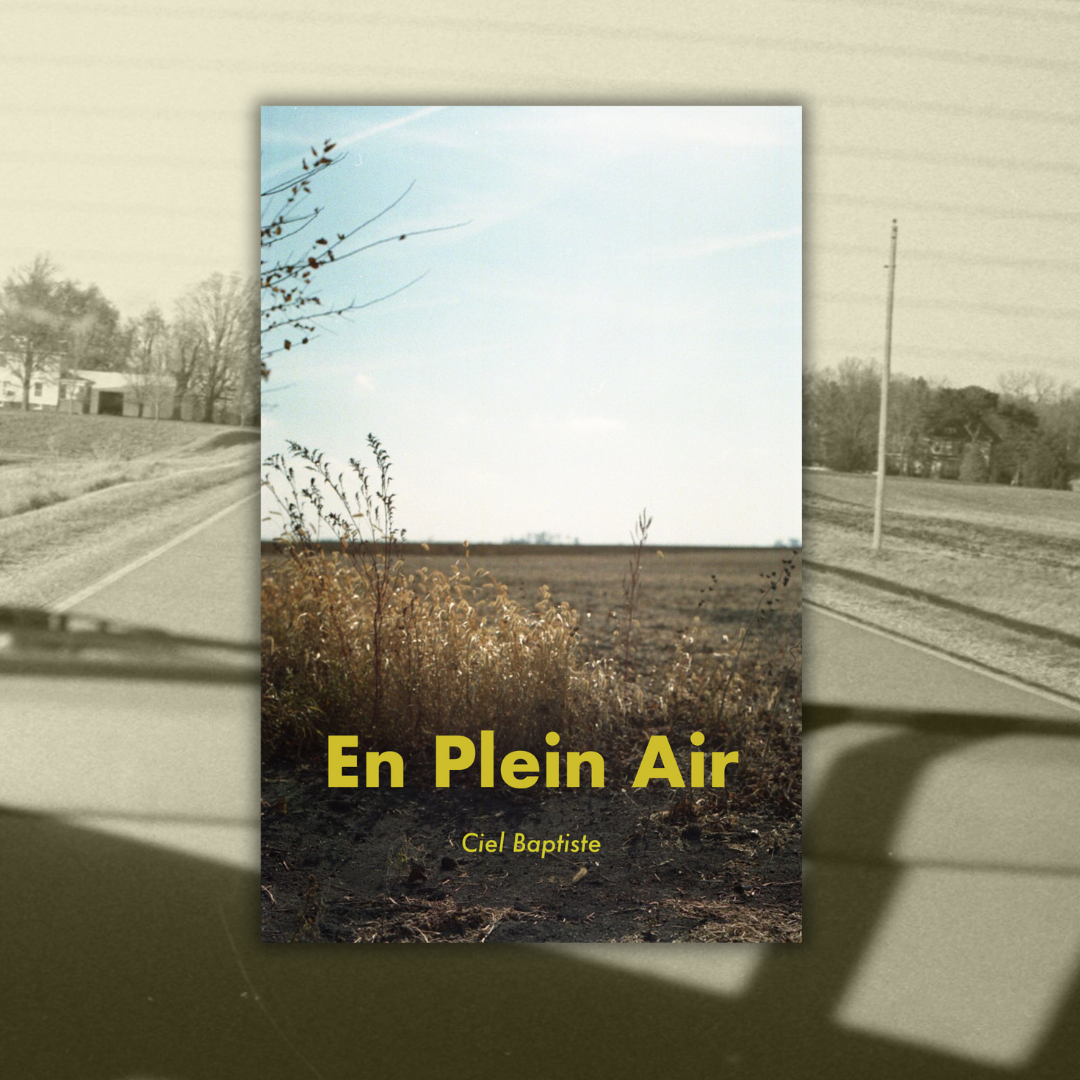
En Plein Air refers to the practice of painting outdoors. It entered the public lexicon in France in the 1800s with the advent of portable easels and paint tubes; artists, once confined to their studios, could now create their work—landscapes, portraits, nocturnes—out in the world.
Many photographers busy themselves with still lifes and studio portraits; I, on the other hand, am drawn to the flat, airy landscapes of central Illinois. I’m charmed by waterlogged fields, termite-ridden barns, and the symmetry of phone lines and cornfields. En Plein Air is a collection of snapshots of rural vistas and landmarks, moments frozen in time. It also includes images from my series Midwest Gothic, which combines historical texts with landscapes from Central Illinois and South-Central Missouri. Together, this collection of images alludes to a distant memory of a once-bustling hub of agriculture, left to decay as the country aged.
——————
Ciel Baptiste is a film photographer based in Urbana, Illinois. They discovered photography through Parkland College and quickly developed a love for film grain, chromatic aberrations, and high contrast. Deeply influenced by cinema, Baptiste draws inspiration from auteurs such as Agnès Varda, Rainer Werner Fassbinder, and Andrei Tarkovsky, whose photographic sensibilities inspired them to harness the power of the image. A lifelong resident of Illinois, they aspire to create a body of work that pays homage to the beauty of the Midwest and work exclusively within that region. For Baptiste, image-making is only half complete when the shutter is pressed. The other half takes place in the darkroom, where negatives are enlarged and inverted, contrast is refined, scale is tested, and the image is otherwise shaped and transformed. It is in the darkroom that the real, intended photograph emerges. Their work has been featured in several juried exhibitions at Parkland College’s Giertz Gallery, as well as in Immaterial Books 2024 Fields of Vision show.
——————
Edition: 100
Page Count: 26
Dimensions: 5.5”x8.5”
Format: Saddle Stitch / Zine
ISBN: 978-1-962415-13-2
Sharp Ideas
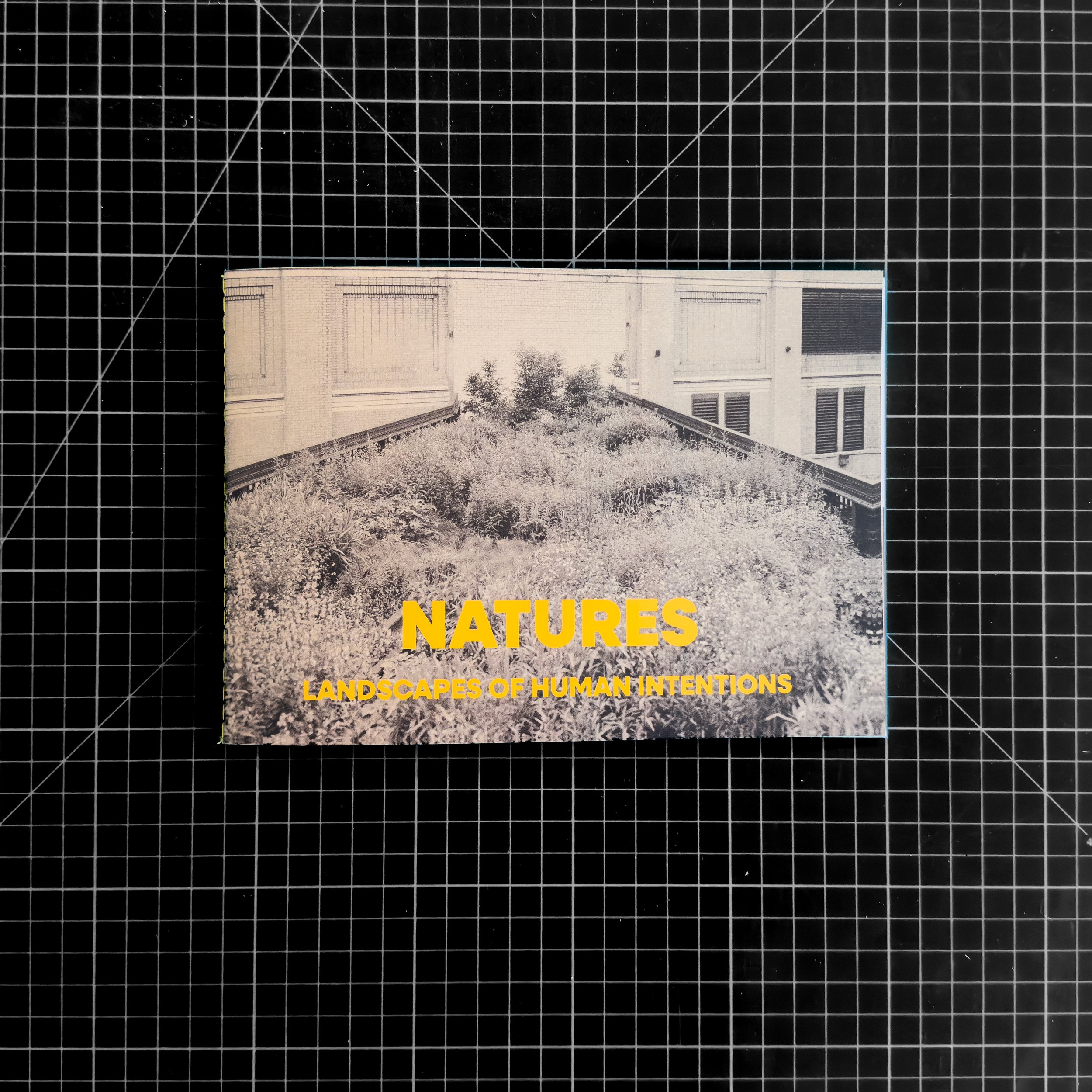
We derive meanings from natures. But can these meanings be intrinsic to what we might call a “bare nature”? Or are these meanings only ever self-referential to our species-defining production of totems, divine revelations, or modern systems of scientific gaze? In other words, does our search for beauty and meaning in nature only reveal an inward gaze—landscapes of human intentions? Or does nature speak to us—and if so, what are its languages?
——————
Photographers: Cody Cobb, Preschelle Ann Bigueras, Julia Coddington, Benedetta Falugi, Don Hudson, Jordi Huisman, Phillip Kalantzis Cope, Simon Kossoff, Michael Kowalczyk, Sasha Kurmaz, Anne-Sophie Landou, Markus Lehr, Catherine Lemblé, Anna Longworth, Brad McMurray, Wendy Morgan, Chris Moxey, Lars Nordström, Brian O’Neill, Gerry Orkin, Julie Paterson, Ed Peters, Chris Round, Nayeem Siddiquee, Monica Smaniotto, Valeria Tofanelli, Bart van Damme, Michael Writston, Dmitry Yurchenko
Curator: Phillip Kalantzis Cope
——————
Edition: 500
Page Count: 60
Dimensions: 8.5” x 5.75”
Format: Saddle Stitch
ISBN: 978-1-962415-06-4 (2nd Edition)
ISBN: 978-1-7355008-1-2 (1sd Edition)
——————
PRESS / LINKS:

On the street, the image-maker searches for that moment where you can see the sharpness of time. They lie in wait, foresee, make impulsive interventions, or establish distance through an anthropological gaze. In this dance, authentic life meets photographic agency. At the same time, light plays on the surface, connecting a technical medium to the source of life itself. The image maker uses this natural force to illuminate form, action, and space. In doing so, they offer languages of light and time as pathways of transcendental exchange between the image-maker, the viewer, and our essential shared meaning-making facilities. But does the "everyday" appear naturally? Or is life always a prop in “constructing” a scene? Can we know the difference?
——————
Photographers: Alicja Brodowicz, Tonatiuh Cabello, Caspar Claasen, Sergi Escribano, Marco Giusfredi, Asli Gonen, Todd Gross, Tim Hale, Zisis Kardianos, Lesya Kim, Peter Kool, Łukasz Korulczyk, Charalampos Kydonakis, Phillip Kalantzis Cope, Linda Maclean, Bill McIntyre, Gustavo Minas, Suresh Naganathan, Monserrat Orallo, Artem Pankov, Andrea Ratto, Jodi Rogers, Koushik Sinha Roy, Jack Simon, Valeria Tofanelli, Lukas Vasilikos, Alice Christine Walker, Wong Wei-him
Curator: Phillip Kalantzis-Cope
——————
Edition: 500
Page Count: 62
Dimensions: 8.5” x 5.75”
Format: Saddle Stitch
ISBN: 978-1-962415-05-7 (2nd Edition)
ISBN: 978-1-962415-99-6 (1st Edition)
——————
PRESS / LINKS
Website
The Railway
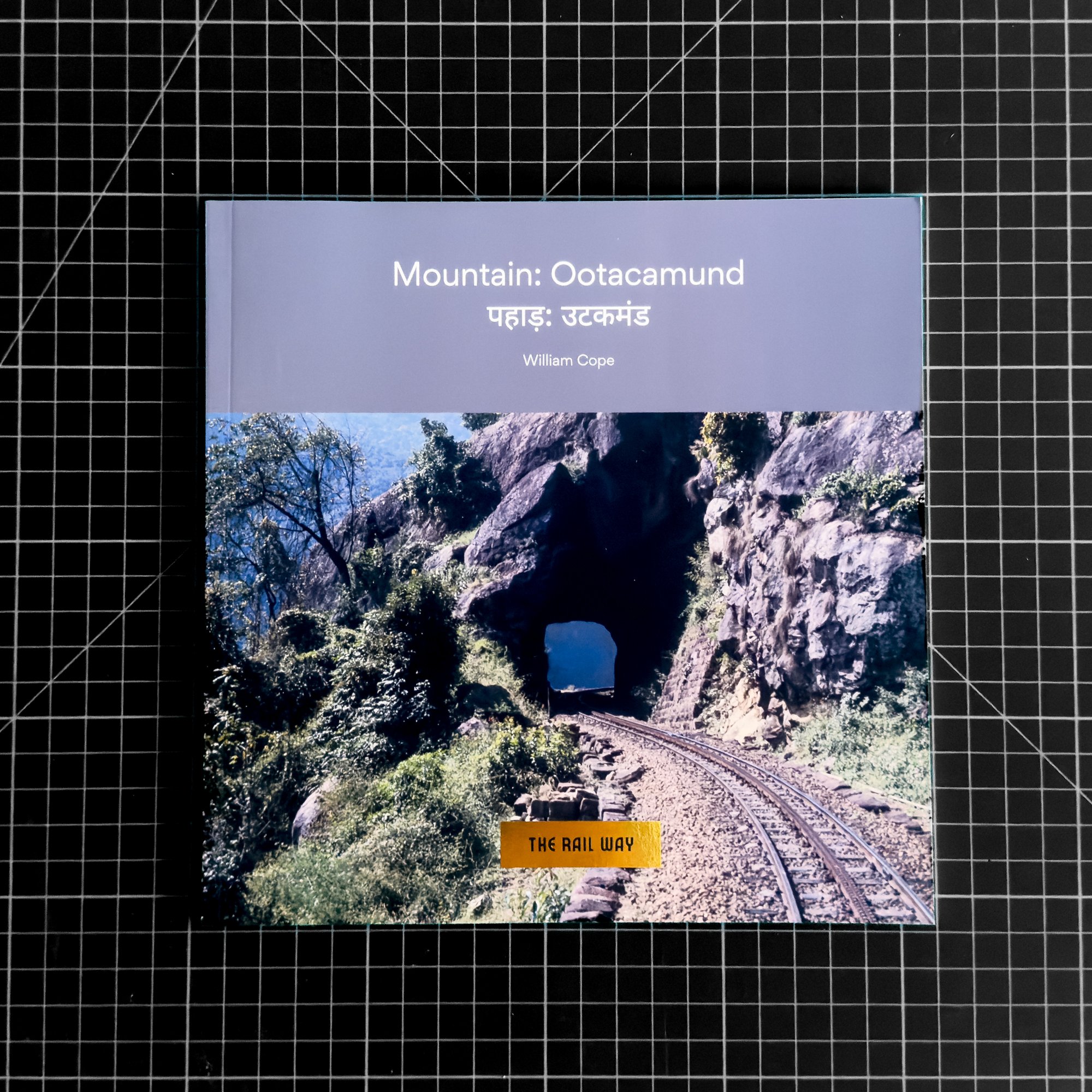
Ootacamund is one of a trilogy of books on Indian Mountain railways by William Cope, showing how an essentially horizontal technology can deny the vertical. The journey begins at Madras Central Station with the Nilgiri Express. After an overnight journey of 329 miles, passengers change at Mettupalayam onto the metre gauge Nilgiri Mountain Railway. Four and a half hours, 29 miles and 6,200 feet later, the train arrives in Ootacamund, a former Hill Station of the British Raj.
Each book of the trilogy focuses on an Indian mountain railway: the Darjeeling Himalayan Railway in West Bengal, the Nilgiri Mountain Railway in Tamil Nadu, and the Matheran Hill Railway in Maharastra. In their precipitous landscapes, these three railways are without doubt beautiful. The pictures speak to that. However, in his introductory texts accompanying the photographs, William Cope also explores the often-difficult human stories behind each railway and every image. His question for these lines: what does the railway mean?
——————
William Cope traveled the lines photographed in these books in 1977, 1981, and 2013. His photographs can be found on the internet at The Rail Way.
———
Edition: Limited Edition of 100; numbered and signed
Page Count: 63 pages; 27 photographs
Dimensions: 8” x 8”
Format: Perfect Bound
ISBN: 978-1-962415-02-6
——————
PRESS / LINKS:
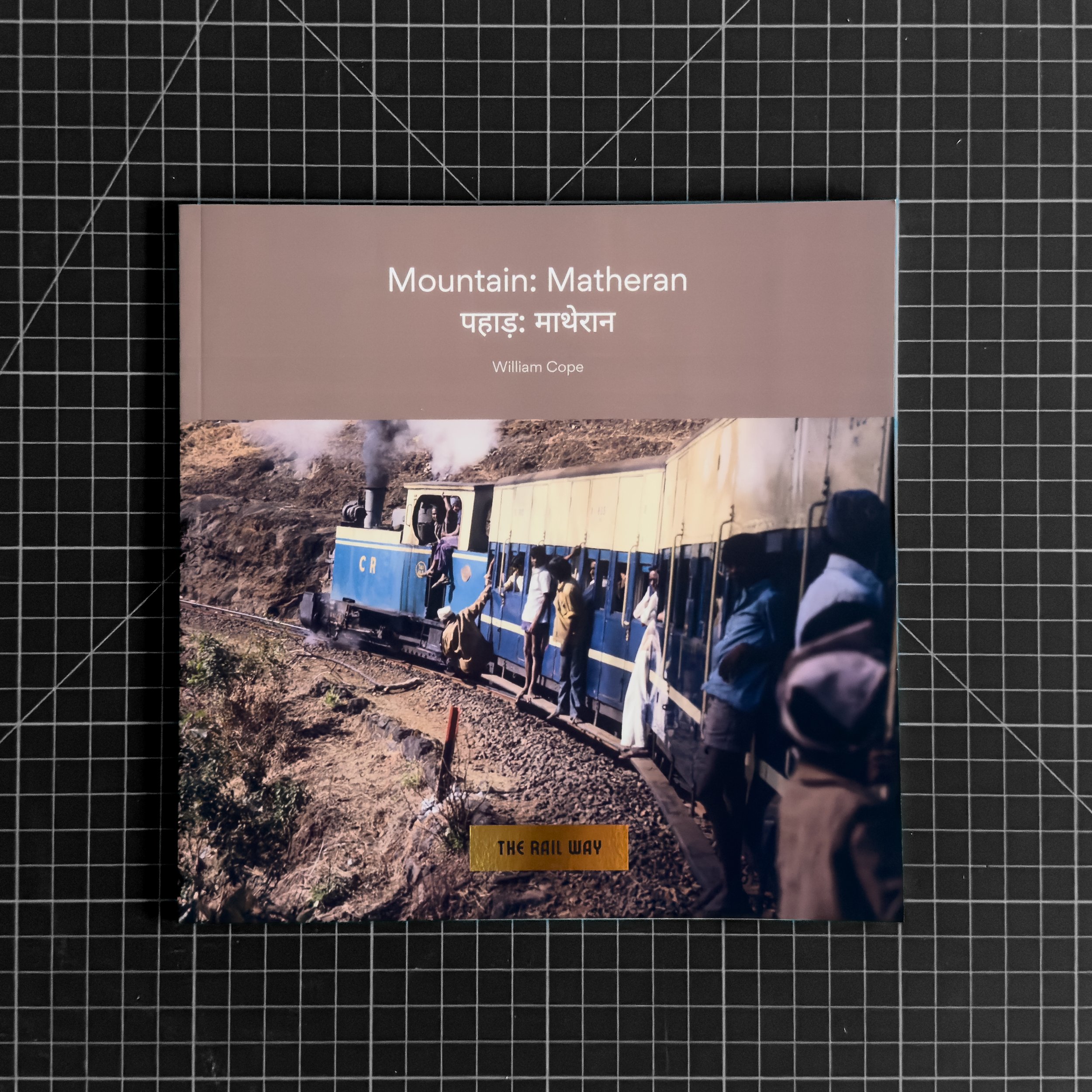
Matheran is one of a trilogy of books on Indian Mountain railways by William Cope, showing how an essentially horizontal technology can deny the vertical. The journey begins at Bombay Victoria Terminal with the Deccan Express. Fifty miles later, passengers change at Neral Junction onto the 2 ft gauge Matheran Hill Railway. Nearly three hours, thirteen miles and 2,500 feet later, the train arrives in Matheran Hill, a former Hill Station of the British Raj. In this book, William Cope explores in image and text the often-difficult human stories behind the railway. His question: what does the railway mean?
The trilogy focuses on Indian mountain railways: the Darjeeling Himalayan Railway in West Bengal, the Nilgiri Mountain Railway in Tamil Nadu, and the Matheran Hill Railway in Maharastra. In their precipitous landscapes, these three railways are without doubt beautiful. The pictures speak to that. However, in his introductory texts accompanying the photographs, William Cope also explores the often-difficult human stories behind each railway and every image. His question for these lines: what does the railway mean?
——————
William Cope traveled the lines photographed in these books in 1977, 1981, and 2013. His photographs can be found on the internet at The Rail Way.
——————
Edition: Limited Edition of 100; numbered and signed
Page Count: 44 pages; 23 photographs
Dimensions: 8” x 8”
Format: Perfect Bound
ISBN: 978-1-962415-03-3
——————
PRESS / LINKS:
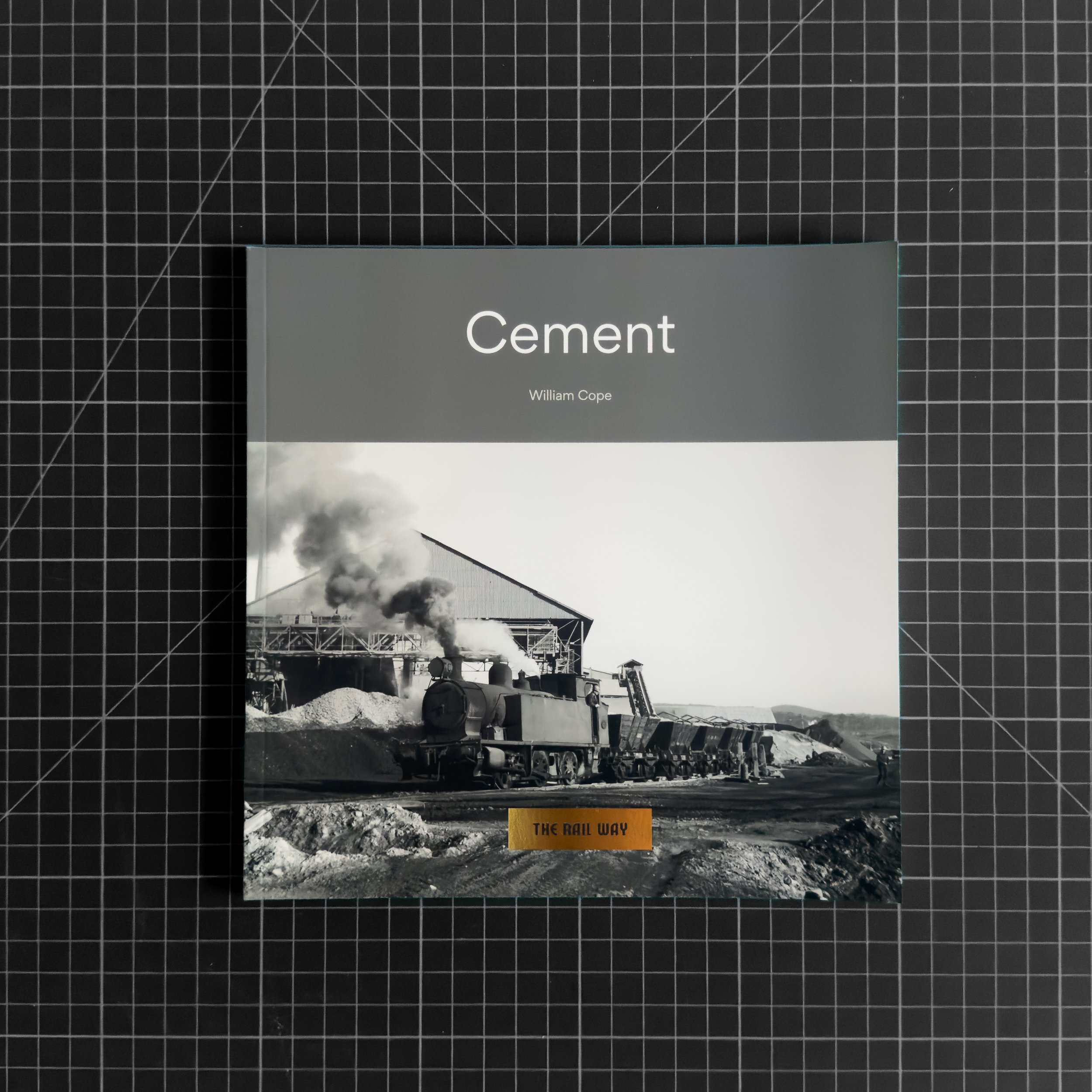
In this book, William Cope captures this small journey in photographs. His introduction sets the railway line in the larger context of the history of the cement works and, beyond that, the difficult history of cement as a quintessentially modern product.
“It was just a mile from the Commonwealth Portland Cement works to the Portland railway station in New South Wales, Australia. But for such a short stretch of otherwise ordinary industrial railway line, there was surprising drama. Small steam locomotives hauled their heavy wagons out of their foreboding setting in the works, struggled up a steep hill, passed under one road, then across another, finally crossing a field in a sweeping curve to reach the station. Here, the wagons would be picked up by a goods train on the government railway for transportation to Sydney and empties picked up for return to the works. “
——————
William Cope visited Portland a number of times in 1973-1976 to capture the pictures in this book.
——————
Edition: 200
Page Count: 48 pages; 26 images
Dimensions: 8” x 8”
Format: Perfect Bound
ISBN: 978-1-7355008-7-4
——————
PRESS / LINKS:
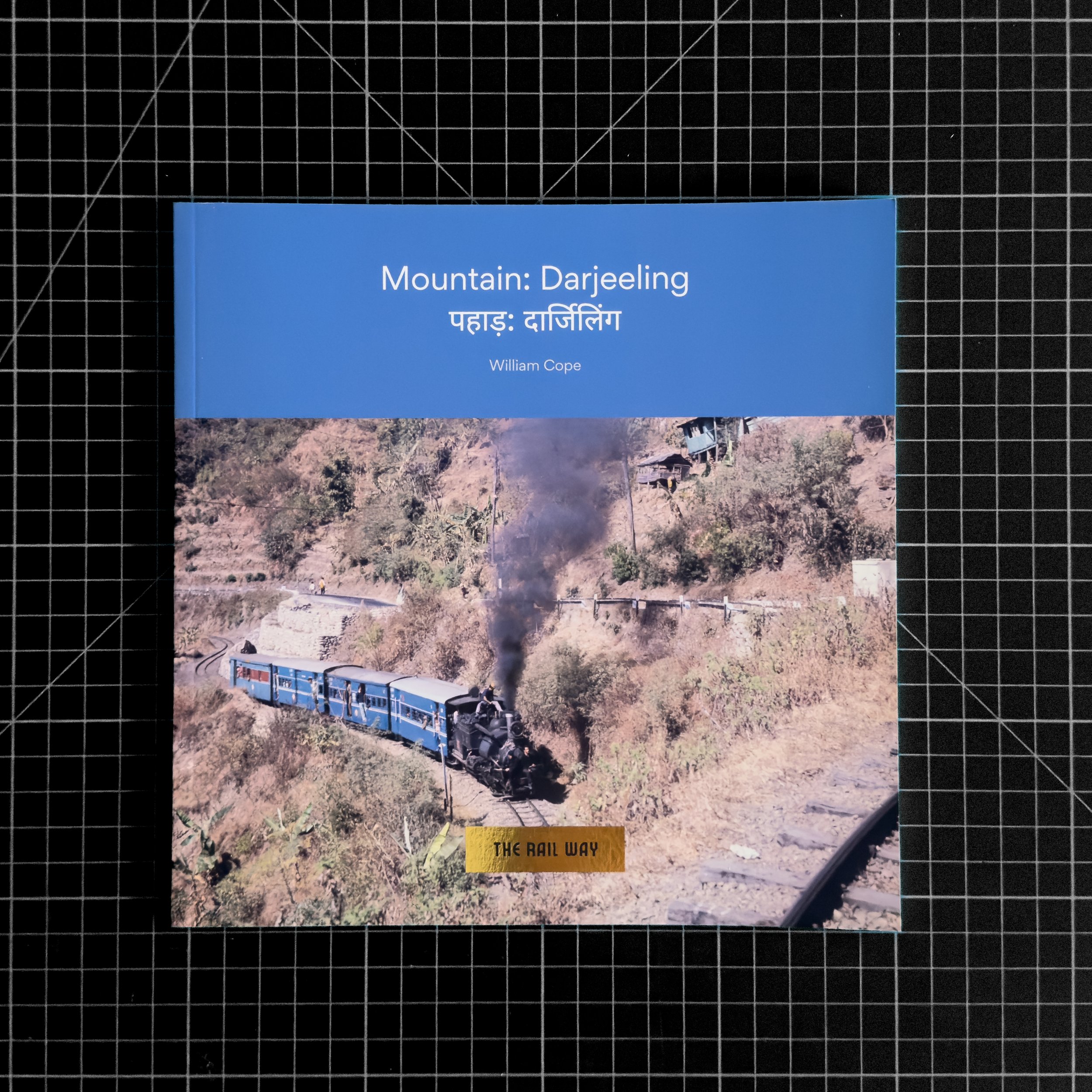
Darjeeling is one of a trilogy of books on Indian Mountain railways by William Cope, showing how an essentially horizontal technology can deny the vertical. The journey begins at Sealdah Station, Calcutta, with the Darjeeling Mail. After an overnight journey of 359 miles, passengers change at New Jalpaiguri Junction onto the 2ft gauge Darjeeling Himalayan Railway. Eight hours, 50 miles and 6,500 feet later, the high peaks of the Himalayas spring into view, and the train arrives in Darjeeling.
The trilogy focuses on Indian mountain railways: the Darjeeling Himalayan Railway in West Bengal, the Nilgiri Mountain Railway in Tamil Nadu, and the Matheran Hill Railway in Maharastra. In their precipitous landscapes, these three railways are without doubt beautiful. The pictures speak to that. However, in his introductory texts accompanying the photographs, William Cope also explores the often-difficult human stories behind each railway and every image. His question for these lines: what does the railway mean?
——————
William Cope traveled the lines photographed in these books in 1977, 1981, and 2013. His photographs can be found on the internet at The Rail Way.
——————
Edition: Limited Edition of 100; numbered and signed
Page Count: 67 pages; 26 photographs
Dimensions: 8” x 8”
Format: Perfect Bound
ISBN: 978-1-962415-01-9
——————
PRESS / LINKS: