

FIELDS OF VISION
*
FIELDS OF VISION *
Contemporary Photography in Central Illinois


An Annual Exhibition
& Zine Series
What fields of view influence our orientations to photographic representations of Central Illinois? Are we oriented by geographical boundaries, the rhythms of agricultural landscapes, processes of collective myth-making, lived connections to land and place, or all of the above? How might the pre-existing depth of field shape our meaning-making processes? How do visual imaginaries, tracing their way back to midwestern industrialization as portrayed in the Regionalist Art Movement, or themes explored in the context of the Farm Security Administration and the New Deal Works Progress Administration documentation, or the ever-present “road trip” tropes shape visual practices? Often the focus of such experiences remains voyeuristic, capturing a kind of carnival of oddities as one passes from one point to another. What are “our” focal points? Are there unique perspectives speaking from the “inside” to “out” that might contrast prior imaginaries? What processes can allow one to speak from the “inside”? Is there a circle of confusion? A unique, if blurred, spot, that is, an indistinctness between the visual representations of the past, what is contemporary, and what is the future that is now shaping contemporary photography in Central Illinois?


Curated by Tim Hale
Annual Exhibitions

Zine Series
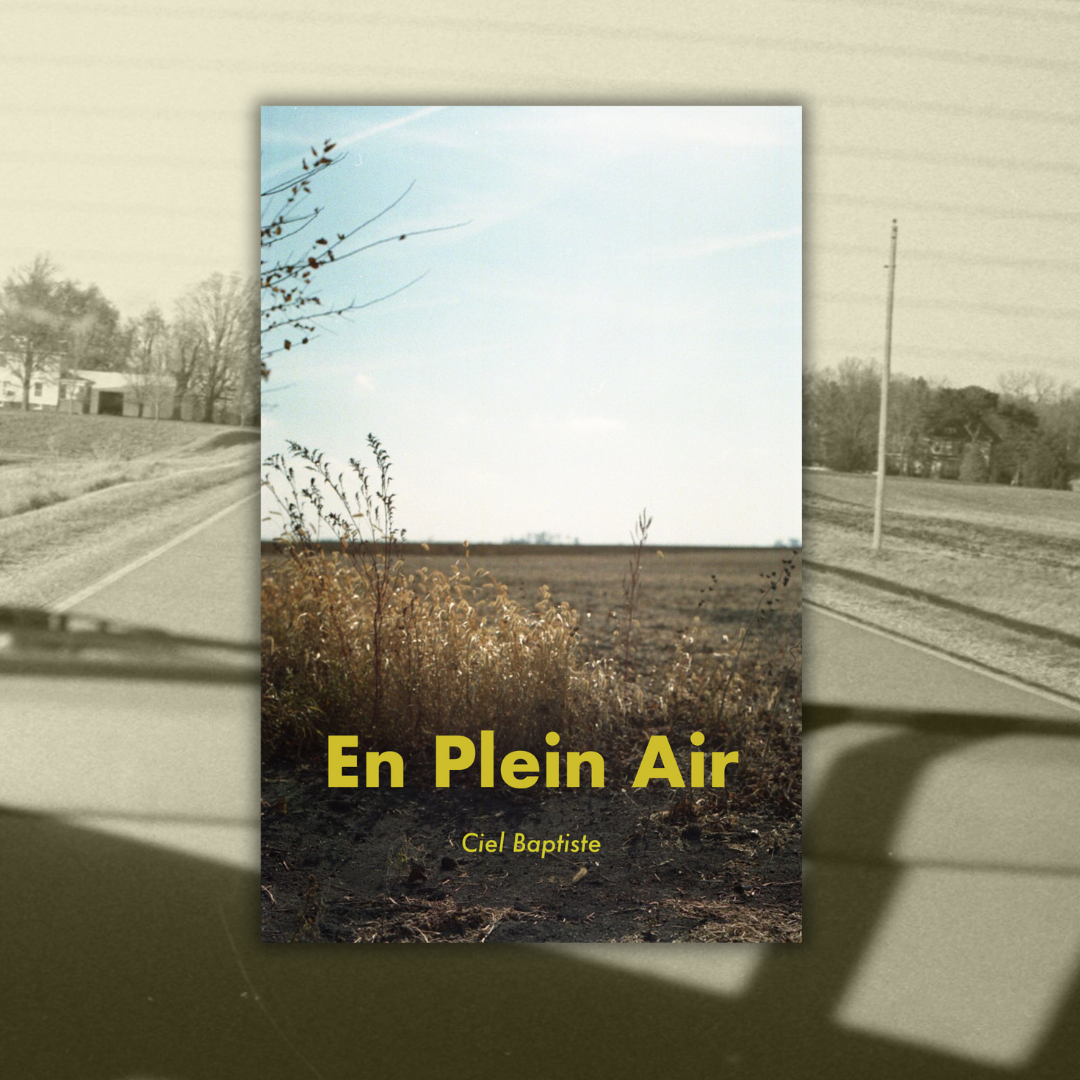
En Plein Air refers to the practice of painting outdoors. It entered the public lexicon in France in the 1800s with the advent of portable easels and paint tubes; artists, once confined to their studios, could now create their work—landscapes, portraits, nocturnes—out in the world.
Many photographers busy themselves with still lifes and studio portraits; I, on the other hand, am drawn to the flat, airy landscapes of central Illinois. I’m charmed by waterlogged fields, termite-ridden barns, and the symmetry of phone lines and cornfields. En Plein Air is a collection of snapshots of rural vistas and landmarks, moments frozen in time. It also includes images from my series Midwest Gothic, which combines historical texts with landscapes from Central Illinois and South-Central Missouri. Together, this collection of images alludes to a distant memory of a once-bustling hub of agriculture, left to decay as the country aged.
——————
Ciel Baptiste is a film photographer based in Urbana, Illinois. They discovered photography through Parkland College and quickly developed a love for film grain, chromatic aberrations, and high contrast. Deeply influenced by cinema, Baptiste draws inspiration from auteurs such as Agnès Varda, Rainer Werner Fassbinder, and Andrei Tarkovsky, whose photographic sensibilities inspired them to harness the power of the image. A lifelong resident of Illinois, they aspire to create a body of work that pays homage to the beauty of the Midwest and work exclusively within that region. For Baptiste, image-making is only half complete when the shutter is pressed. The other half takes place in the darkroom, where negatives are enlarged and inverted, contrast is refined, scale is tested, and the image is otherwise shaped and transformed. It is in the darkroom that the real, intended photograph emerges. Their work has been featured in several juried exhibitions at Parkland College’s Giertz Gallery, as well as in Immaterial Books 2024 Fields of Vision show.
——————
Edition: 100
Page Count: 26
Dimensions: 5.5”x8.5”
Format: Saddle Stitch / Zine
ISBN: 978-1-962415-13-2
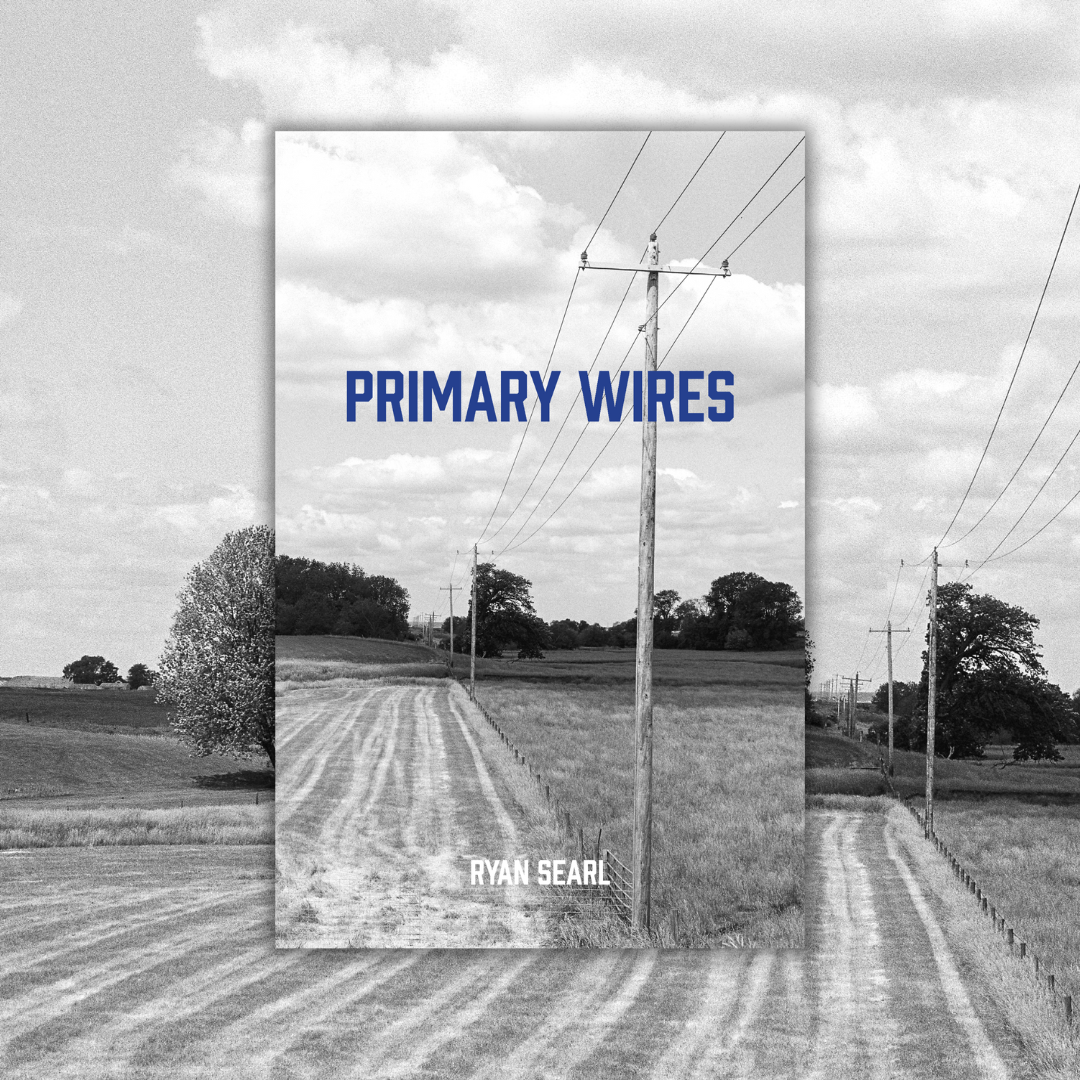
Being born and raised among some of the flattest land in the nation, utility poles and power lines became an early photographic fixation. Aside from the easy metaphors of connectivity, power, and the distribution of resources, these lines ebb and flow across flat Illinois farmland, from one horizon to another, in an undeniably moving manner. Primary Wires (named after the top-most pair of lines) feature just a few of the 180 million utility poles spread across the US.
——————
Ryan Searl (b. 1994) is a lens-based artist and photo zinemaker from Ottawa, Illinois. His work explores contemporary and underrepresented rural spaces in the tradition of regionalism and the FSA photo project. Searl's photography focuses on backroad midwestern communities that can often be characterized as too hermetic or flat for the American canon of post-documentary road trip photography, but hold a wealth of history, dignity, and unexplored stories. His work has been featured in Immaterial Book's “Fields of Vision” show and is in the collection of the Minneapolis College of Art and Design.
——————
Edition: 100
Page Count: 34
Dimensions: 5.5”x8.5”
Format: Saddle Stitch / Zine
ISBN: 978-1-962415-12-5
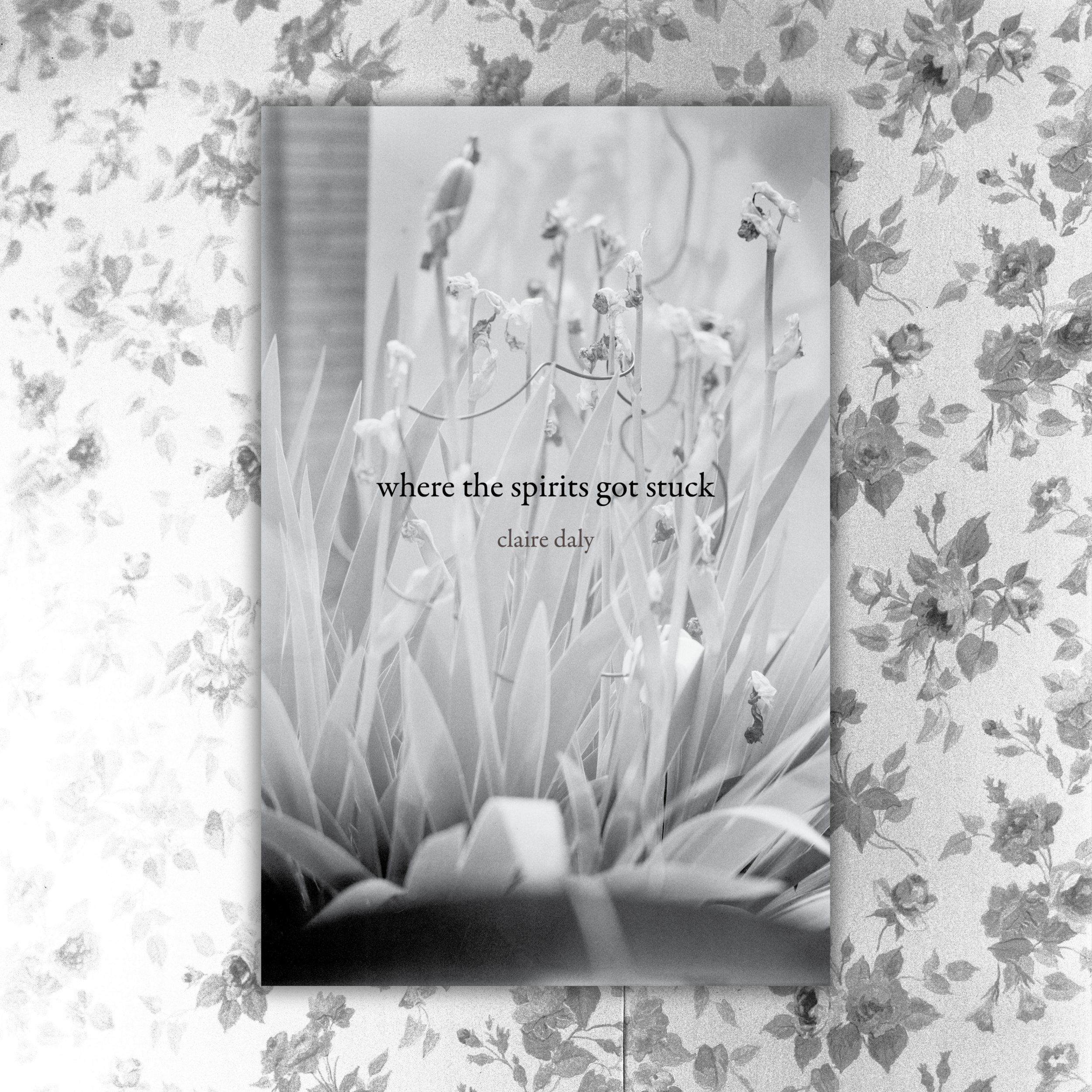
For six years, I photographed objects and interiors while preparing houses for estate sales. As I pieced each home back together, the sheer number of houses blurred into a single blueprint. The large-format camera allowed anomalies and the unexpected to reveal themselves—light blinding rather than clarifying. The images became a conduit between me and these strangers, as I let the unseen guide the work.
———
Claire Daly is a photographer based in Urbana, Illinois. She was a 2024 participant in Alec Soth’s Workshop from Home, a 2025 Fellow at Lesley University’s Low Residency in Visual Arts Summer Program, and a 2024/2025 recipient of an Illinois Arts Council Grant. Her current project is a part of Penumbra Foundation’s 2026 Long Term Program: The Photobook.
———
Edition: 100
Page Count: 28
Dimensions: 5.5”x 8.5”
Format: Saddle Stitch / Zine
ISBN: 978-1-962415-14-9

Here in rural southern Illinois, I see the same things over and over. Grain bins, baseball fields, cornfields, corn dogs, tractors, hay bales, farm houses, beer cans, churches, pork burger sales, and tank batteries. I photograph it all, I find the repetition comforting.
This work is inspired by the books of Ed Ruscha.
——————
Nathan Pearce is an artist based in Southern Illinois. Pearce works in book and zine making and photography. Pearce’s publications are held in several artists' book and library collections, including those at MoMA, The Met, Museum of Contemporary Photography, and the Center for Creative Photography. His work has been exhibited in solo shows at the PhotoNola festival, Cedarhurst Center for the Arts, Nizhniy Tagil Museum of Fine Arts, and The Rangefinder Gallery in Chicago. He has been published in over 200 books, zines, and exhibition catalogs and online in The Huffington Post, The British Journal of Photography, Juxtapoz, and Self Publish Be Happy.
——————
Edition: 100
Page Count: 26
Dimensions: 5.5”x8.5”
Format: Saddle Stitch / Zine
ISBN: 978-1-962415-10-1
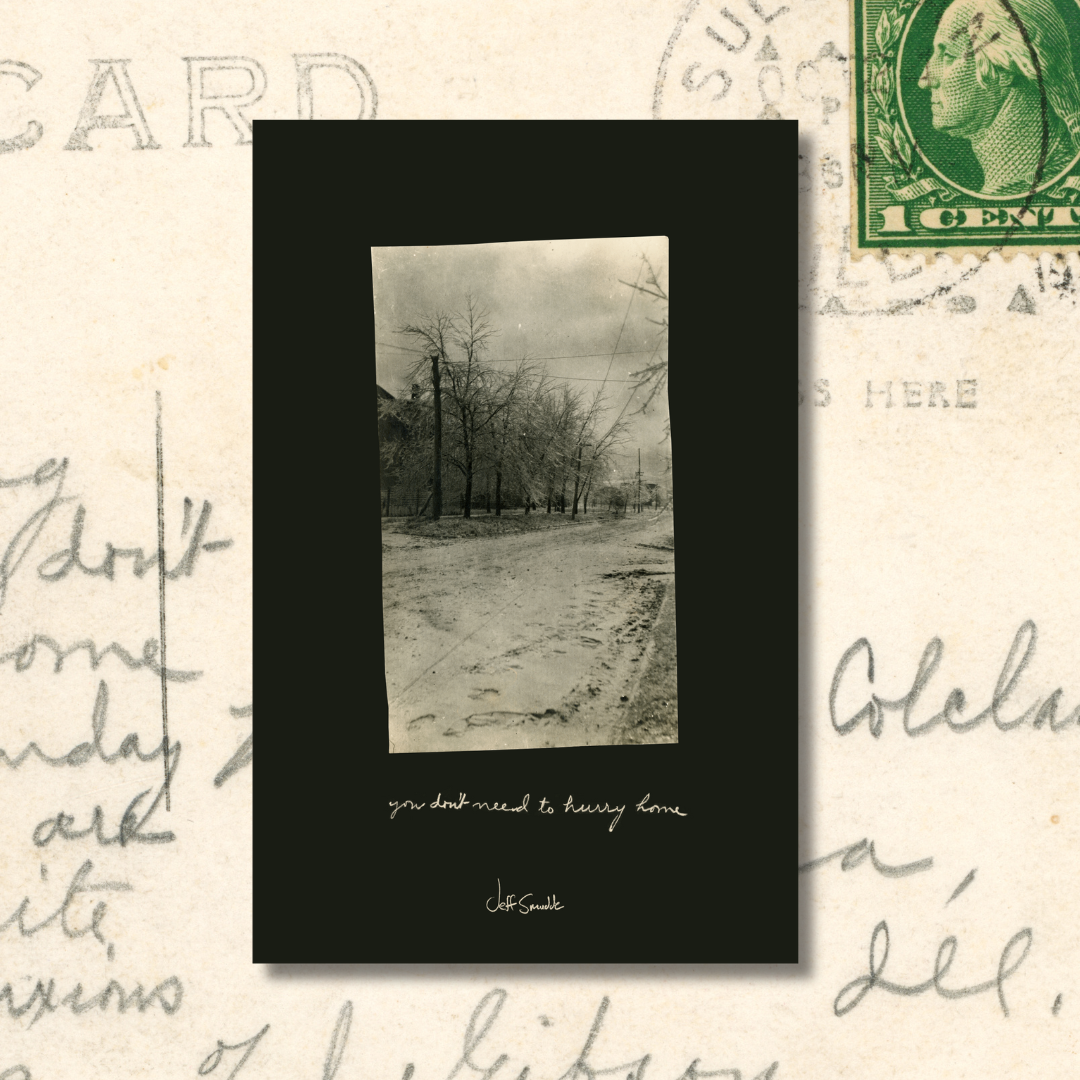
You Don’t Need to Hurry Home takes its name from a postcard sent in 1919 from Sullivan, Illinois, to Flora, Illinois. The postcard shows a rural road, likely in Sullivan, with telegraph poles overhead and frost-covered trees. Footprints and wheel tracks mark the lower third of the photograph, which was printed crookedly to adjust the image’s off-kilter angle. “We are getting along alright…” wrote the sender 106 years ago. “Write often as I am anxious…” This image captures an Illinois I hold dear, one I frequently photograph—the decaying rural spaces that have outlasted their time, the wooden posts and slats barely holding on, bullet-riddled signs, and barriers rarely performing their intended function. These photographs hold their subjects in perpetual tension, clinging to whatever they can, with the past permanently preserved within the frame.
——————
Jeff Smudde (pr. “SMOO-dee”; b. 1997, Metro Detroit, Michigan, he/him/his) is an artist currently based in the Providence, Rhode Island area using various photographic processes and sound. He received his Master of Fine Art at the University of Massachusetts Dartmouth in 2023 as a Distinguished Art Fellow and his Bachelor of Art from Illinois State University in 2019. His poetic documentary-style work comes from a background in journalism, a Midwestern cultural upbringing, and an interest in the landscape of America with a focus on perceptions of place and spirituality.
——————
Edition: 100
Page Count: 36
Dimensions: 5.5”x8.5”
Format: Saddle Stitch / Zine
ISBN: 978-1-962415-11-8

“Feedback is a method of controlling a system by reinserting into it the results of its past performance. If these results are merely used as numerical data for the criticism of the system and its regulation, we have the simple feedback of the control engineers. If, however, the information which proceeds backward from the performance is able to change the general method and pattern of performance, we have a process which may well be called learning.
Norbert Wiener. The Human Use of Human Beings: Cybernetics and Society (1950)
****
Machine Learning probes the interface between human perception and artificial intelligence by applying post‑industrial image‑making techniques to industrial and rural landscapes. Instead of relying on textual prompts, the project fed photographs into DALL·E’s first‑generation deep‑learning model—trained on some 400 million image‑text pairs— and challenged it to hallucinate entirely new interpretations of those scenes. These algorithm‑generated visions prompt critical reflection on emerging visual economies and the shifting locus of authorship: to what extent will creative agency reside with the human operator versus computational processes? What unforeseen visual realities might such synthetic re-imaginings disclose—realities beyond the reach of unaided human observation?
Machine Learning stages this inquiry, unsettling traditional notions of artistic production in an era increasingly defined by algorithmic vision.
——————
Phillip Kalantzis Cope is a Greek-born photographer, author, and cultural theorist based in Champaign, Illinois, USA. He bridges visual art and critical theory, exploring how digital media, property, and technology shape social life. His photography and scholarship are internationally published and exhibited, emphasizing human environments and the unseen narratives of everyday experience.
——————
Edition: 100
Page Count: 48
Dimensions: 5.8” x 8.3”
Format: Saddle Stitch
ISBN: 978-1-7355008-6-7
——————
PRESS / LINKS: